

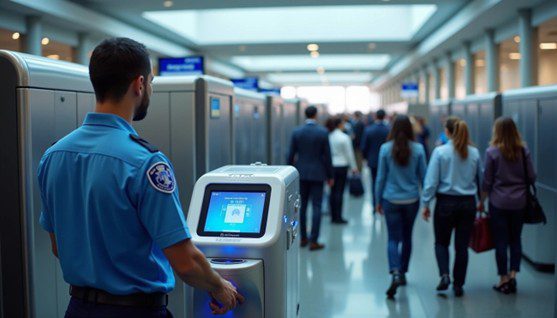
Did you know that TSA news recently announced a major change that could impact your next flight? Starting February 1, 2026, travelers without a REAL ID-compliant license or acceptable alternative ID will face additional verification steps at airport checkpoints.
This latest development introduces a new verification program designed to help passengers who arrive at security without proper identification. The program requires a $45 fee and uses both biographic and biometric verification methods to confirm your identity. However, with some preparation, you can easily avoid this additional expense and potential travel delays.
Whether you’re a frequent flyer or occasional traveler, understanding these new TSA requirements is essential for smooth airport experiences. Fortunately, there are several ways to prepare before the REAL ID deadline arrives. In this article, we’ll explore everything you need to know about TSA’s program, including how it works, who needs to use it, and most importantly, how to avoid the extra fee altogether.
What Is TSA and Why It Matters
Confirm.id represents a significant change in airport security procedures for travelers without proper identification. This new identity verification program, scheduled to launch on February 1, 2026, offers a solution for passengers who arrive at TSA checkpoints without acceptable identification [1].
REAL ID enforcement and background
The foundation of this program dates back to 2005 when Congress passed the REAL ID Act, implementing the 9/11 Commission’s recommendation that the federal government “set standards for the issuance of sources of identification, such as driver’s licenses” [2]. This legislation established minimum security standards for license issuance and production, aiming to create more secure identification documents nationwide.
After several delays spanning nearly two decades, REAL ID enforcement finally began on May 7, 2025 [3]. A REAL ID-compliant license or identification card typically features a star in the upper corner, making it easily identifiable [4].
Who needs to use confirm.id?
Primarily, three groups of travelers will need to use the program:
- Those who present non-REAL ID compliant state-issued identification
- Individuals who have lost their identification
- Anyone without another acceptable form of ID
According to TSA news, approximately 94% of passengers already use REAL ID-compliant identification or other acceptable forms when traveling [3]. Nevertheless, the remaining 6% will be directed to the process if they still wish to fly after being notified of their non-compliance [5].
The list of acceptable alternative identification includes:
- U.S. passport or passport card
- DHS trusted traveler cards (Global Entry, NEXUS, SENTRI)
- U.S. Department of Defense ID
- Permanent resident card
- Border crossing card
- Federally recognized Tribal Nation/Indian Tribe photo ID
- HSPD-12 PIV card
- Foreign government-issued passport
- Canadian provincial driver’s license or Indian and Northern Affairs Canada card
Why TSA introduced this program
TSA introduced for several critical reasons. First, the program enhances security by ensuring that everyone who flies undergoes proper identity verification, consequently preventing unauthorized individuals from accessing domestic transportation systems [1].
Additionally, the $45.00 fee structure ensures that the cost of verifying travelers without proper identification falls on those individuals rather than on taxpayers [3]. The verification process typically takes 10-15 minutes but could extend to 30 minutes or more depending on circumstances [1].
Once verified through, travelers receive a 10-day window of validity, allowing them to complete round-trip journeys or multiple flight segments without paying additional fees [7]. Importantly, paying the fee does not guarantee verification, as travelers whose identities cannot be confirmed may still be denied access to secure areas [7].
Confirm.id essentially, serves as a modernized alternative to the previous manual verification system, balancing security requirements with the practical needs of travelers who arrive without proper identification.
What Happens If You Don’t Have a REAL ID
Traveling without proper identification at airport checkpoints creates unnecessary stress during your journey. Since the May 7, 2025, enforcement date, REAL ID compliance has become mandatory for domestic air travel. Understanding your options when you don’t have a REAL ID will help you navigate security procedures more smoothly.
List of acceptable IDs
Fortunately, the TSA accepts various identification documents beyond REAL ID-compliant licenses. These alternatives include:
- U.S. passport or passport card
- DHS trusted traveler cards (Global Entry, NEXUS, SENTRI, FAST)
- U.S. Department of Defense ID, including IDs issued to dependents
- Permanent resident card
- Border crossing card
- State-issued Enhanced Driver’s License
- Federally recognized, tribal-issued photo ID
- HSPD-12 PIV card
- Foreign government-issued passport
- Canadian provincial driver’s license or Indian and Northern Affairs Canada card
- Transportation worker identification credential
- U.S. Citizenship and Immigration Services Employment Authorization Card (I-766)
- U.S. Merchant Mariner Credential
For minors under 18 traveling with an adult companion, no identification is required, though airlines may have their own requirements for proof of age.
Consequences of arriving without valid ID
Arriving at a TSA checkpoint without acceptable identification triggers a specific protocol. Initially, a TSA officer will attempt to verify your identity using two forms of alternative identification that contain your name, such as a credit card, health insurance card, or social security card.
When this verification fails, you face several potential consequences:
- Denial of entry to secure areas of the airport
- Missing your scheduled flight
- Additional screening procedures
- Extra time spent at security (potentially 30+ minutes)
- Referral to the process (with associated fees)
Most critically, travelers should understand that identity verification is non-negotiable. Despite being a paid service, confirm.id does not guarantee checkpoint clearance if your identity cannot be verified through the process.
Referral to process
When standard identification verification fails, TSA officers will direct you to the confirm.id process. This system replaces the previous manual verification procedures with a more streamlined biometric approach.
The process follows these steps:
- You’ll be escorted to a designated area within the checkpoint
- A TSA officer will collect your $45.00 fee (credit card only)
- You’ll complete a digital form with biographic information
- The system captures your photo for biometric matching
- TSA verifies your identity against government and commercial databases
- Upon successful verification, you receive clearance to proceed to screening
The entire process typically takes 10-15 minutes but may extend longer during busy periods or if complications arise during verification. Once completed successfully, your verification remains valid for 10 days, covering return trips and connecting flights.
An important distinction: confirm.id serves as a last resort for travelers without proper identification. It’s not intended as a regular alternative to carrying proper ID, and the fee structure intentionally discourages reliance on this system for routine travel.
Planning ahead remains your best strategy. Check your identification documents well before your travel date and update to a REAL ID or ensure you have one of the acceptable alternative forms of identification ready for your journey.
How the Program Works
The program represents a complete overhaul of how TSA handles travelers without acceptable identification. Instead of the previous manual verification methods, this modernized system employs technology to streamline the identity verification process while maintaining strict security standards.
Biographic and biometric verification
At its core, TSA utilizes a dual verification approach. The system collects both biographic information (personal details) and biometric data to establish your identity with confidence. This technology-enabled approach allows TSA to match your information against their Secure Flight watchlist results, ensuring both your identity and security clearance [8].
Furthermore, this verification method significantly expands TSA’s capacity to process travelers without acceptable ID compared to previous manual systems [8]. The technology functions by creating a temporary digital identity record that links your physical appearance with your claimed identity.
Unlike the older system that relied heavily on call center verifications, confirm.id leverages advanced matching algorithms against government and commercial databases for more efficient processing [6].
Steps at the airport checkpoint
Upon arriving without acceptable identification, you’ll follow these specific steps:
- Notification at initial TSA check-in about ID non-compliance
- Referral to the process before entering the main security line [3]
- Payment of the $45 fee (online in advance or at designated airport locations)
- Submission of required biographic information
- Capture of biometric data for identity matching
- Verification against security databases
- Clearance determination
The specific implementation of these steps varies by airport, as TSA works with private industry partners to create consistent yet adaptable processes nationwide [3]. In particular, the payment options differ between locations, with some airports offering more streamlined digital payment methods [3].
What to expect during the process
First off, be prepared for additional time requirements. The verification process typically takes 10-15 minutes but may extend to 30 minutes or more depending on your specific circumstances and the airport’s implementation [1].
Travelers should also understand that paying the fee does not guarantee verification success. If your identity cannot be validated through confirm.id, you may still be denied access to secure areas and unable to board your flight [6]. For this reason, arriving with proper identification remains the recommended approach.
Additionally, even after successful verification, you may still undergo additional screening measures [8]. The process includes a thorough pat-down and bag search as standard procedure [9].
Once verified, your clearance remains valid for 10 days, covering round-trip travel or multi-segment itineraries without requiring additional payments [10]. This 10-day window provides reasonable flexibility for most travelers’ needs.
Ultimately, confirm.id offers a solution for those without proper identification, TSA officials consistently emphasize that obtaining and traveling with REAL ID-compliant identification or other acceptable forms remains the most efficient option.
Understanding the $45 Fee and Validity
Examining the financial aspects of TSA’s new identity verification solution reveals important details travelers should understand. The program comes with specific costs and conditions that directly affect your travel experience when you don’t have appropriate identification.Confirm.ID
Fee amount and what it covers
The Transportation Security Administration currently charges a $45.00 fee for travelers who need to use the program [1]. This amount represents a significant increase from the initially proposed fee of $18.00 [11]. TSA officials raised the fee after determining that the alternative identification program would cost more than originally anticipated [11].
This fee primarily serves to recover government-incurred costs [3]. Specifically, the fee covers:
- Technology and administrative costs of identity verification [7]
- Initial development and deployment expenses [12]
- Ongoing operation of the verification system [12]
How long the fee is valid
Once paid, the fee remains valid for 10 days from the first use [13]. Throughout this period, travelers can verify their identity multiple times without incurring additional charges [4]. This structure particularly benefits those with multi-segment itineraries or round-trip journeys within the 10-day window [7].
Importantly, although the payment covers multiple potential uses, travelers must successfully confirm their identity on each separate occasion [4]. The TSA intends to re-evaluate this fee structure every two years going forward [4].
Refund policy and limitations
Perhaps the most critical aspect for travelers to understand is that the $45.00 fee is completely non-refundable [12]. This applies in all circumstances, regardless of whether:
- Your identity is successfully verified [12]
- Verification fails and you cannot enter the secure area [12]
- You experience delays or other issues during the process [14]
Paying the fee offers no guarantee of verification success [3]. Even after payment, travelers whose identities cannot be verified may still be denied boarding and access to secure areas of the airport [7].
The TSA designed this strict policy intentionally as part of its strategy to encourage travelers to obtain and use REAL ID-compliant identification or other acceptable alternatives whenever possible [15].
How to Avoid the Fee
Preventing the $45 fee requires minimal preparation yet delivers maximum travel convenience. The most effective approach is to simply arrive at the checkpoint with proper identification.
Check your ID before traveling
First, examine your driver’s license or state ID card. A REAL ID-compliant license features a star marking in the upper right corner [16]. In California, look for a golden bear with a white star in the middle [17]. If you see text reading “FEDERAL LIMITS APPLY” instead, your ID won’t be accepted at TSA checkpoints [17].
Moreover, verify your ID’s expiration date well before departure day. Currently, TSA accepts expired IDs up to two years after expiration for certain forms of identification [18]. Nonetheless, traveling with current, valid identification remains the safest approach.
Digital ID options in participating states
Digital identification represents an emerging alternative in select locations. Presently, 14 states plus Puerto Rico accept digital IDs for TSA verification [19]. These include Arizona, California, Colorado, Georgia, Hawaii, Iowa, Louisiana, Maryland, New Mexico, New York, Ohio, Puerto Rico, Utah, Virginia, and West Virginia [19].
Digital IDs work with various platforms:
- Apple Wallet (compatible in 12 states and Puerto Rico) [20]
- Google Wallet
- Samsung Wallet
- State-specific mobile apps [19]
Importantly, even when using digital identification, TSA requires travelers to carry an acceptable physical ID as backup [21]. Digital ID gives more travelers options even without a REAL ID-compliant driver’s license [20].
Conclusion
The TSA program represents a significant shift in airport security protocols for domestic travelers. While this new system provides a solution for passengers without proper identification, preparing ahead remains your best strategy. The $45 fee, though valid for 10 days, cannot be refunded regardless of verification outcome.
Most importantly, checking your identification well before your travel date helps avoid unnecessary complications. Look for the star marking that indicates REAL ID compliance or consider using other acceptable alternatives such as a passport or passport card. Digital ID options have also emerged as convenient alternatives in participating states, though physical backup identification remains essential.
Though approximately 94% of travelers already use REAL ID-compliant identification, those who don’t risk facing additional verification steps, potential delays, and extra costs. The verification process typically takes 10-15 minutes but could extend longer during busy periods.
Ultimately, TSA designed this program to enhance security while placing financial responsibility on travelers who arrive without a REAL ID. This small preparation step saves you time, money, and ensures a smoother journey through airport security in this new era of travel identification requirements.
References
[1] – https://www.tsa.gov/tsaconfirm-id
[2] – https://www.tsa.gov/real-id/real-id-faqs
[4] – https://www.tsa.gov/sites/default/files/confirm.id-fee-development-report-as-of-12_02_25.pdf
[5] – https://travel.state.gov/content/travel/en/News/passports/passports-realid.html
[7] – https://www.usatoday.com/story/travel/2025/12/01/tsa-no-real-id-fee/87548248007/
[9] – https://www.tsa.gov/videos/asktsa-what-expect-when-verifying-your-id-during-airport-screening
[11] – https://www.npr.org/2025/12/02/g-s1-100045/travelers-without-real-id-charged-fee
[12] – https://www.federalregister.gov/documents/2025/12/03/2025-21830/tsa-confirmid-user-fee
[13] – https://www.investopedia.com/how-to-avoid-this-new-usd45-fee-next-time-you-travel-11859757
[14] – https://www.fox10phoenix.com/news/tsa-end-real-id-grace-period-45-fee-starts-february
[15] – https://time.com/7337956/real-id-fee-air-travel-screening-tsa/
[16] – https://www.usa.gov/real-id
[17] – https://www.kqed.org/news/12027050/apply-for-real-id-deadline-may-7-can-i-fly-without
[18] – https://www.tsa.gov/travel/security-screening/identification